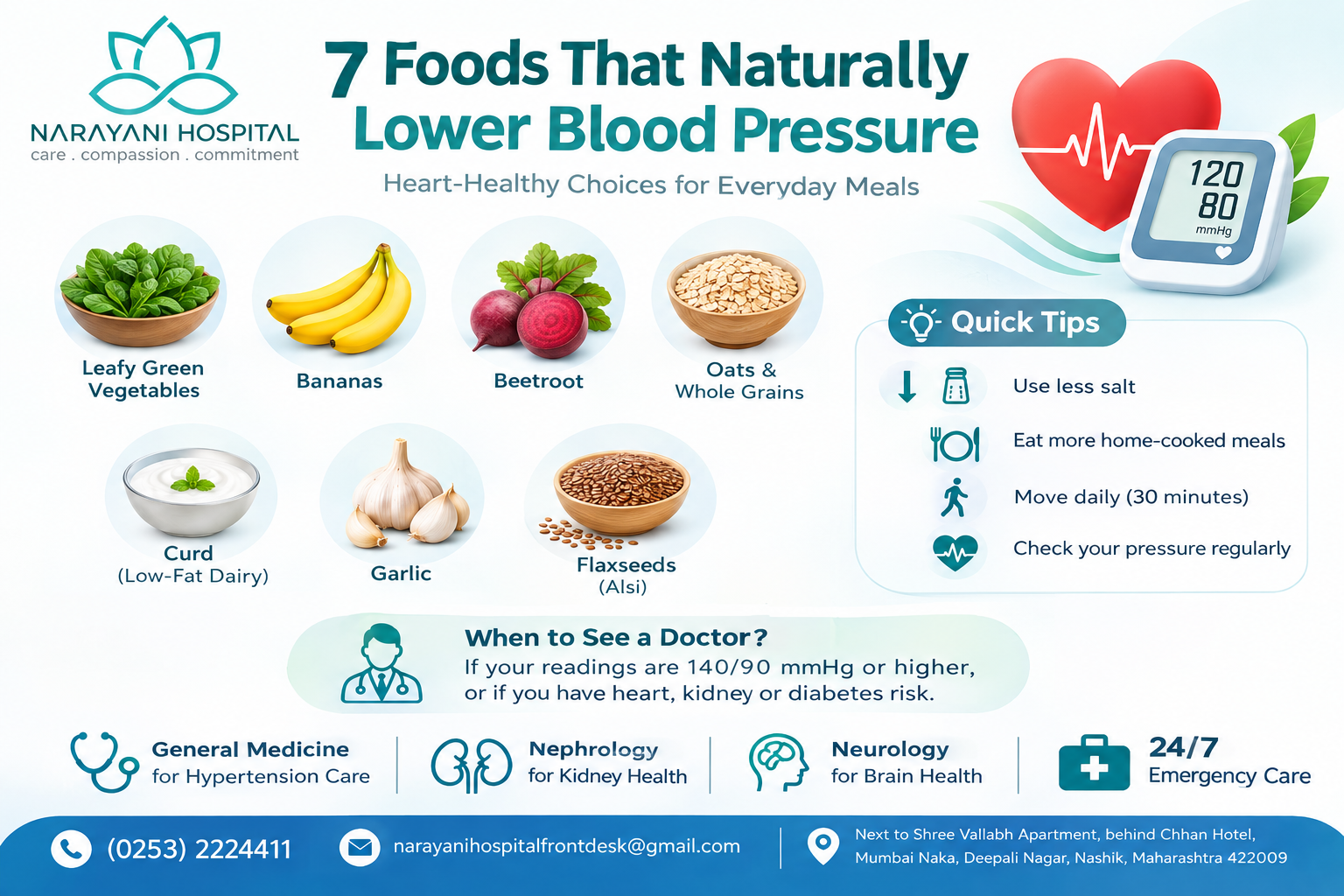
7 Foods That Naturally Lower Blood Pressure
Many people in Nashik first learn they have high blood pressure by accident. A routine check-up, a visit for an unrelated problem, or a blood pressure machine at a family function shows a number that is higher than expected. There is often no headache and no warning. That is why doctors call hypertension a “silent” condition.
The good news is that what you eat every day has a real effect on your blood pressure. Food is not a replacement for medicine when your doctor has prescribed it. It is, however, one of the strongest supports for your treatment, and for many people with mildly raised readings it is where management begins.
At Narayani Hospital, our general medicine team often sees patients who want to know what to put on their plate. Here are seven foods that research and clinical experience support, along with simple ways to use them in Indian home cooking.
Why Diet Matters for High Blood Pressure
Blood pressure is the force of blood pushing against the walls of your arteries. When it stays high for years, it strains the heart, damages blood vessels, and can harm the kidneys, eyes and brain. It is a major risk factor for heart attack and stroke.
Two things in food matter most. Sodium (mostly from salt) makes the body hold on to water, which raises pressure. Potassium, magnesium and calcium help the body get rid of extra sodium and let blood vessels relax. A good blood pressure diet is mainly about eating less of the first and more of the second group.
Now let’s look at the foods.
1. Leafy Green Vegetables (Palak, Methi, Amaranth)
Spinach, fenugreek leaves, amaranth (chaulai) and other greens are rich in potassium and magnesium. They also contain natural nitrates, which the body converts into nitric oxide. This helps the blood vessels widen and relax.
How to eat them: Add palak to dal, knead methi into parathas, or make a light stir-fry with garlic and a pinch of salt. Cook greens lightly so they keep their nutrients, and avoid frying them in too much oil.
2. Bananas
Bananas are a simple, affordable source of potassium, and they are available in every Nashik market all year round. Potassium helps your kidneys flush out extra sodium and eases tension in the walls of the blood vessels.
How to eat them: One banana with breakfast, or sliced into oats or curd, is enough. Other good potassium sources include coconut water, sweet potatoes and tomatoes.
An important note: If you have kidney disease, do not increase potassium-rich foods without asking your doctor first. Damaged kidneys cannot clear potassium well, and too much can be dangerous. Our nephrology team can advise on a safe diet for your situation.
3. Beetroot
Beetroot is one of the best-studied foods for blood pressure. Like leafy greens, it is high in dietary nitrates. Several studies have found that beetroot juice can lower blood pressure modestly within hours of drinking it, though the long-term effect depends on eating it regularly as part of a good diet.
How to eat it: Add grated beetroot to salads, make a raita, or cook it as a simple sabzi. If you drink the juice, avoid adding sugar. People prone to kidney stones should check with their doctor first, as beetroot is high in oxalates.
4. Oats and Other Whole Grains
Refined foods such as white bread and maida products give you calories but few nutrients. Whole grains such as oats, jowar, bajra, ragi and brown rice contain fibre, magnesium and other compounds that support heart health. Oats in particular contain beta-glucan, a fibre that helps lower cholesterol, and cholesterol and blood pressure often go hand in hand.
How to eat them: Swap one refined item a day for a whole-grain one. A bowl of vegetable oats upma, a jowar roti or a ragi porridge makes a good start. Choose plain oats rather than flavoured packets, which often contain added sugar and salt.
5. Curd (Dahi) and Low-Fat Dairy
Calcium helps blood vessels tighten and relax properly, and studies of large groups of people have linked moderate intake of low-fat dairy with lower rates of high blood pressure. Curd is also a probiotic food that many Indian families already eat daily.
How to eat it: Have a bowl of plain curd with lunch, or drink a glass of thin, unsalted buttermilk (chaas). Choose low-fat or toned milk products and avoid sweetened or heavily salted versions.
6. Garlic
Garlic has been used in home remedies for centuries, and it has some science behind it. It contains a compound called allicin, which may help blood vessels relax. Studies suggest garlic can reduce blood pressure slightly, with the effect seen more clearly in people whose readings are already high.
Be realistic here. Garlic is a helpful addition, not a treatment on its own. It works best as part of an overall healthy diet.
How to eat it: Use fresh garlic generously in tadkas, chutneys and curries. Letting crushed garlic rest for a few minutes before cooking helps preserve its active compounds. And because garlic adds so much flavour, you can use less salt, which helps your blood pressure in another way.
7. Flaxseeds (Alsi) and Other Seeds
Flaxseeds are a good plant source of omega-3 fats, fibre and magnesium. Some studies suggest that daily flaxseed, especially when ground, may lower blood pressure slightly over a few months. Pumpkin and sunflower seeds also supply magnesium.
How to eat them: Dry-roast flaxseeds, grind them, and stir one spoonful into curd, atta, smoothies or chutney powder. Whole seeds often pass through the body undigested, so grinding makes a real difference.
Foods and Habits to Cut Back On
Adding good foods only works if you also reduce the ones that push pressure up. In many Indian kitchens the biggest culprits are easy to spot:
- Extra salt: Pickles (achaar), papad, chutneys, instant noodles, chips, namkeen and processed snacks are very high in sodium. The World Health Organization recommends keeping salt intake below 5 grams (about one teaspoon) a day. Most of us eat much more without realising.
- Packaged and fried foods: These often contain hidden salt and unhealthy fats.
- Too much tea, sugar and sweets: Excess sugar contributes to weight gain, which raises blood pressure.
- Alcohol and tobacco: Both damage blood vessels and raise blood pressure.
Simple Daily Tips
- Taste before you salt. Many people add salt out of habit. Use lemon, herbs, jeera, pepper and garlic for flavour instead.
- Read labels. Look at the sodium content on packaged foods.
- Eat more home-cooked meals. You control the salt and oil.
- Follow the DASH eating pattern. This stands for Dietary Approaches to Stop Hypertension. It focuses on vegetables, fruits, whole grains, low-fat dairy, nuts and seeds, and limited salt and red meat.
- Move daily. Aim for at least 30 minutes of brisk walking on most days.
- Manage weight and stress. Even a small weight loss can bring readings down, and good sleep and relaxation help too.
- Check your pressure regularly. A home monitor can help you and your doctor track progress.
When to See a Doctor
Food can support your blood pressure, but it cannot replace medical care. Please see a doctor if:
- Your readings are repeatedly 140/90 mmHg or higher.
- You are already on blood pressure medicine. Never stop or reduce it just because you are eating better.
- You have a family history of hypertension, diabetes, heart or kidney disease.
- You experience severe headache, chest pain, blurred vision, breathlessness or sudden weakness. These can be signs of an emergency.
If you have other health conditions, especially kidney or neurological problems, your diet may need to be adjusted by a specialist.
Care You Can Trust in Nashik
At Narayani Hospital, our experienced doctors help patients understand and manage blood pressure through check-ups, tests, personalised advice and long-term follow-up. Our General Medicine department treats hypertension, diabetes and other everyday conditions, and our Nephrology and Neurology specialists are available when blood pressure affects the kidneys or brain. We accept walk-ins, offer same-day appointments, and run a 24/7 emergency unit.
📍 Narayani Hospital, Next to Shree Vallabh Apartment, behind Chhan Hotel, Mumbai Naka, Deepali Nagar, Nashik,
Maharashtra 422009
📞 (0253) 2224411
Final Thoughts
Lowering blood pressure rarely needs dramatic changes. Leafy greens, bananas, beetroot, oats, curd, garlic and flaxseeds are all easy to find and easy to cook. Combined with less salt, regular exercise and timely check-ups, they can make a real difference to your heart and long-term health. Start with one or two changes this week, and build from there.
Disclaimer: This article is for general awareness and does not replace professional medical advice. Please consult a qualified doctor for diagnosis and treatment.