
Type 2 Diabetes: Early Warning Signs You Should Not Ignore
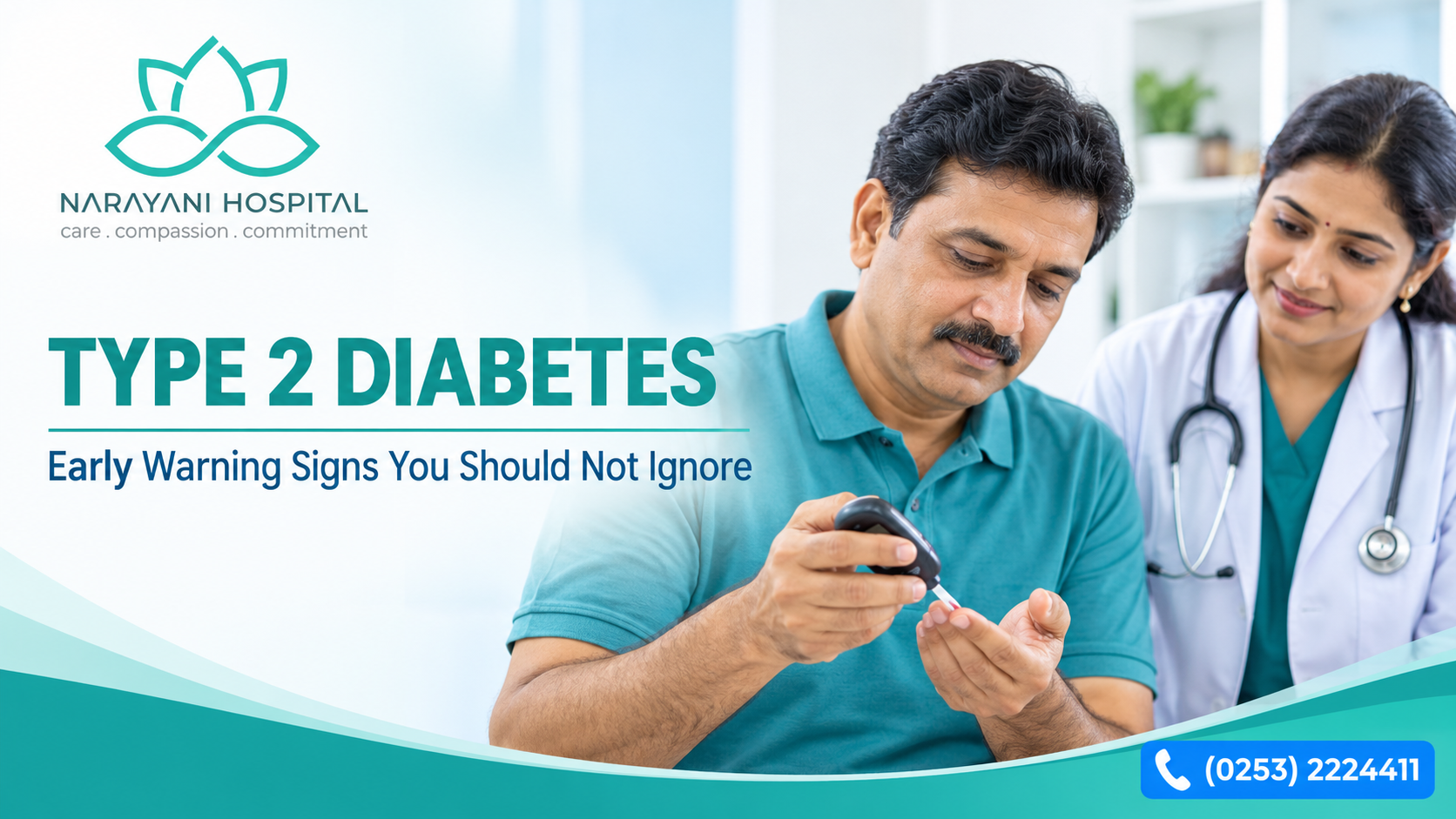
Most people do not wake up one morning with diabetes. Type 2 diabetes usually creeps in over years. Blood sugar rises a little at a time, the body adapts, and the signs are easy to put down to age, stress or a busy life. By the time it is diagnosed, many people have already had high sugar levels for a long while.
This is a real concern in India. The ICMR-INDIAB-17 study found that about 11.4% of adults in India have diabetes and about 15.3% have prediabetes, meaning their sugar is already above normal but not yet in the diabetes range. Studies also suggest that nearly half of people with diabetes in India do not know they have it.
The encouraging part is that early detection changes the story. At Narayani Hospital, our doctors often tell patients that diabetes found early is far easier to manage than diabetes found after complications begin. Here is what to watch for.
What Is Type 2 Diabetes?
When you eat, your body breaks food down into glucose. A hormone called insulin helps that glucose move from the blood into your cells for energy. In type 2 diabetes, the body either stops responding well to insulin (insulin resistance) or does not make enough of it. Glucose then builds up in the blood, and over time that excess sugar damages blood vessels and nerves throughout the body.
Early Warning Signs You Should Not Ignore
Early symptoms can be mild, and some people have none at all. Pay attention if you notice any of these, especially more than one together:
- Frequent urination, especially at night. When there is extra sugar in the blood, the kidneys try to flush it out through urine.
- Increased thirst and a dry mouth. Losing more fluid makes you drink more.
- Constant hunger. Your cells are not getting enough glucose, so the body keeps asking for more food.
- Unusual tiredness. If you feel drained even after a full night’s sleep, high sugar may be one reason.
- Blurred vision. High sugar can swell the lens of the eye and temporarily affect focus.
- Slow-healing cuts and frequent infections. Look out for repeated skin infections, fungal infections, urinary infections or gum problems.
- Tingling, numbness or burning in the hands and feet. This can point to early nerve damage.
- Dark, velvety patches of skin on the neck, armpits or groin. This is called acanthosis nigricans and often signals insulin resistance.
- Unexplained weight loss. This can happen when the body cannot use glucose properly and starts burning fat and muscle instead.
Having one of these does not mean you have diabetes. Many other conditions can cause the same symptoms. But they are good enough reasons to get your blood sugar checked.
Risk Factors: Who Should Be Extra Careful?
You are more likely to develop type 2 diabetes if you:
- Have a parent, brother or sister with diabetes
- Are overweight, or carry extra fat around the waist
- Are physically inactive or have a desk-bound routine
- Have high blood pressure, high triglycerides or low HDL (“good”) cholesterol
- Have prediabetes
- Had gestational diabetes during pregnancy, or have polycystic ovary syndrome (PCOS)
- Are over 35, although more people in their 20s and 30s are being diagnosed now
- Smoke, or eat a diet high in refined carbohydrates, sweets and fried food
A note for Indians: Research shows that South Asians tend to develop type 2 diabetes at a younger age and at a lower body weight than people in Western countries. Guidelines therefore suggest considering testing in Asians once the BMI reaches 23 or more, rather than waiting until 25. A large waistline matters too. Measures above roughly 90 cm in men and 80 cm in women are commonly used as warning levels. So even if you look “not that overweight,” you may still be at risk.
Tests That Diagnose Diabetes: HbA1c and Blood Sugar
Diabetes is diagnosed with a blood test, not by symptoms alone. Doctors mainly use the following:
- HbA1c: This shows your average blood sugar over roughly the last three months. You do not need to fast for it.
- Fasting blood sugar (FBS): Measured after at least 8 hours without food or drink other than water.
- Post-meal or glucose tolerance test (OGTT): Sugar is measured two hours after you drink a measured glucose solution.
- Random blood sugar: Taken at any time of day. A very high reading along with classic symptoms can confirm diabetes.
| Test | Normal | Prediabetes | Diabetes |
|---|---|---|---|
| HbA1c | Below 5.7% | 5.7% to 6.4% | 6.5% or higher |
| Fasting blood sugar | Below 100 mg/dL | 100 to 125 mg/dL | 126 mg/dL or higher |
| 2-hour sugar after 75 g glucose | Below 140 mg/dL | 140 to 199 mg/dL | 200 mg/dL or higher |
| Random blood sugar | - | - | 200 mg/dL or higher, with symptoms |
These ranges follow the American Diabetes Association’s current standards. A few things are worth knowing:
- Unless the person has obvious, severe symptoms, one abnormal result is usually confirmed with a repeat test or a second type of test.
- Diagnosis should be based on a laboratory test. A home glucometer or a quick finger-prick HbA1c device is useful for monitoring, but not for making the diagnosis.
- HbA1c can be unreliable in people with anaemia, thalassaemia or other blood conditions. Anaemia is common in India, so your doctor may prefer a blood glucose test in such cases.
- A prediabetes result is a warning, not a verdict. It is the best time to act.
Who Should Get Tested, and How Often?
If you are an adult with risk factors such as those listed above, ask your doctor about testing even if you feel well. Adults over 35 with no symptoms should still get a baseline test. If your results are normal, repeating the test every one to three years is generally sensible. If you have prediabetes, a yearly check is usually advised. Your doctor will set the right schedule for you.
Lifestyle Changes That Make a Real Difference
Large studies, including the Diabetes Prevention Program, have shown that lifestyle changes can delay or prevent type 2 diabetes in people with prediabetes, and they remain the foundation of treatment after diagnosis too.
- Move more. Aim for at least 150 minutes of brisk activity a week, such as walking, cycling or swimming, and add some strength exercises twice a week. A 10-minute walk after meals helps lower the post-meal sugar rise.
- Lose a little weight if you are overweight. Losing about 5 to 7 percent of body weight can significantly improve insulin sensitivity.
- Rethink your plate. Fill half with vegetables, a quarter with protein such as dal, eggs, fish or paneer, and a quarter with whole grains. Swap white rice, maida and sugary drinks for jowar, bajra, ragi, brown rice and whole pulses.
- Watch portion sizes of carbohydrates. Rice, roti, potatoes, sweets and fruit juices raise sugar quickly when eaten in large amounts.
- Cut back on sugar, sweets and packaged snacks. This includes sweetened tea and cold drinks.
- Sleep well and manage stress. Poor sleep and chronic stress make blood sugar harder to control.
- Quit tobacco and limit alcohol. Both increase the risk of complications.
Why Early Action Matters
Long-standing high blood sugar can quietly damage the eyes (retinopathy), kidneys (nephropathy), nerves (neuropathy), heart and blood vessels, and feet. These changes often begin years before symptoms appear. The sooner your sugar is brought under control, the lower your chance of these problems.
When to Consult a Physician
Please book an appointment if:
- You have two or more of the warning signs above.
- You have risk factors such as a family history, a larger waist or high blood pressure, and have never been tested.
- Your recent test shows prediabetes or a borderline reading.
- You have a wound or foot ulcer that is not healing, or numbness in your feet.
- Your vision has become blurred, or has changed suddenly.
- You are already on diabetes medicine and your readings are not under control.
Go to the emergency department immediately if you or someone with diabetes has severe thirst with repeated vomiting, rapid breathing, a fruity smell on the breath, extreme drowsiness, confusion, or fainting. These can be signs of a serious complication that needs urgent treatment.
Care You Can Trust in Nashik
At Narayani Hospital, our General Medicine team can check your blood sugar and HbA1c, assess your risk, and build a personalised plan for diet, activity and follow-up. If diabetes has started to affect other organs, our Nephrology and Neurology specialists are available to help. We accept walk-ins, offer same-day appointments, and run a 24/7 emergency unit.
📍 Narayani Hospital, Next to Shree Vallabh Apartment, behind Chhan Hotel, Mumbai Naka, Deepali Nagar, Nashik,
Maharashtra 422009
📞 (0253) 2224411
Final Thoughts
Type 2 diabetes is common, but it is not inevitable, and it does not have to become a crisis. Frequent thirst, tiredness, blurred vision and slow-healing wounds are your body’s way of asking for attention. A simple blood test can give you the answer, and a few steady changes to your food and routine can make a lasting difference. If you have been putting off a check-up, let this be the nudge.
Disclaimer: This article is for general awareness and does not replace professional medical advice. Please consult a qualified doctor for diagnosis and treatment. Never start, stop or change diabetes medicines without your doctor’s advice.