Iron-Rich Foods Every Indian Woman Should Include in Her Diet
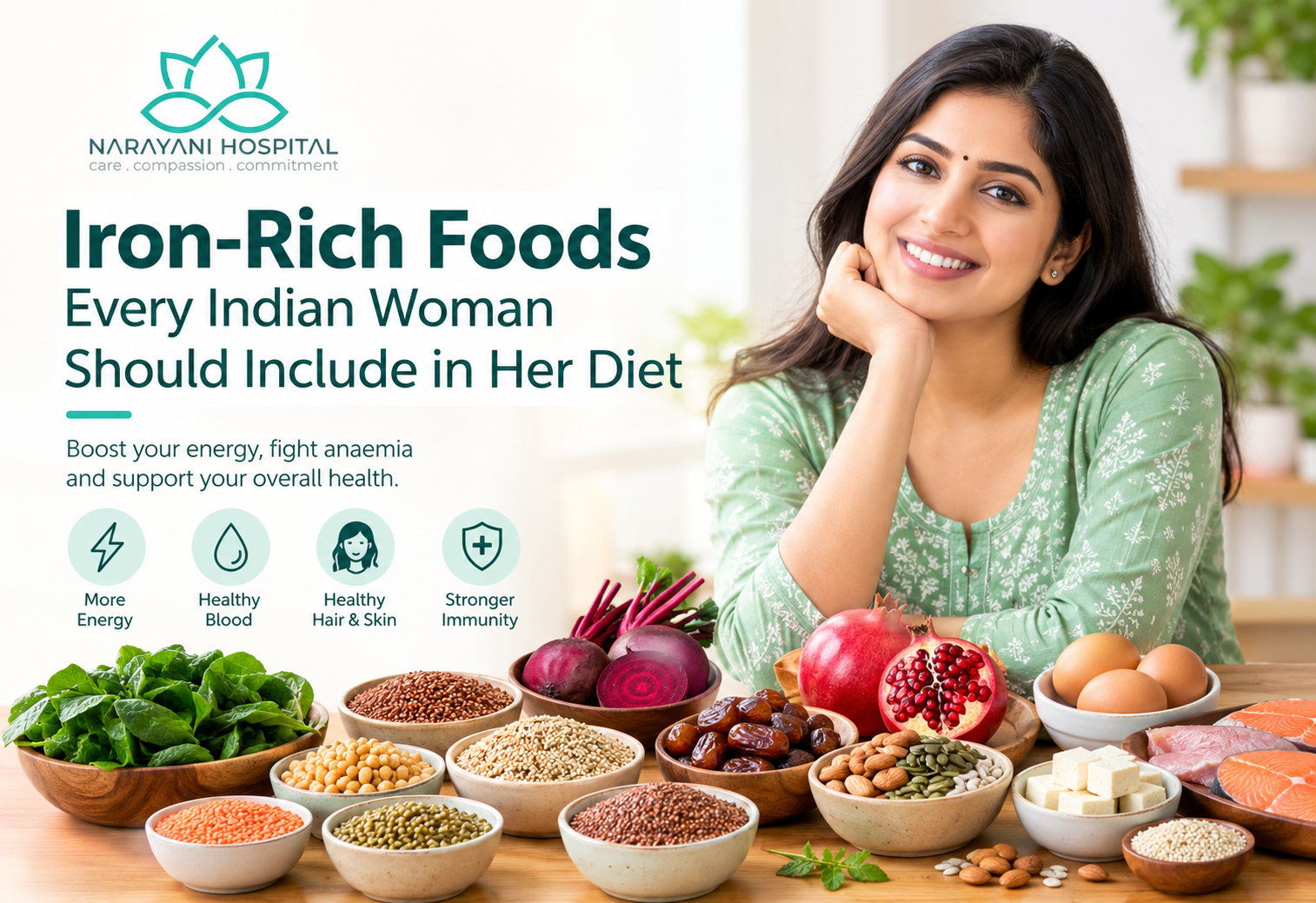
If you often feel tired, dizzy or short of breath, or notice hair fall and pale skin, your diet may be low in iron. Iron deficiency is one of the most common nutritional problems among Indian women, and many of them never get it checked.
According to the National Family Health Survey (NFHS-5), more than half of Indian women aged 15 to 49 are anaemic. The good news is that a well-planned diet can make a real difference. In this guide, the team at Narayani Hospital, Nashik explains why iron matters, how much you need, and which iron-rich foods for Indian women are easy to add to everyday meals.
Why Is Iron So Important for Women?
Iron is a key part of haemoglobin, the protein in red blood cells that carries oxygen from your lungs to every organ. When iron runs low, your body cannot make enough healthy red blood cells, and the result is iron-deficiency anaemia.
Women are at higher risk than men for several reasons:
- Monthly menstrual blood loss, especially with heavy periods
- Pregnancy, when blood volume rises and the baby needs iron to grow
- Breastfeeding, which draws on the mother's nutrient stores
- Diets that are mostly vegetarian or cereal-based, which supply iron the body absorbs less easily
- Skipping meals or crash dieting, which is common among working women and young girls
The ICMR recommends about 29 mg of iron per day for adult Indian women. Needs vary in pregnancy and breastfeeding, so always follow your doctor's advice.
Signs You May Have Low Iron
Watch for these common symptoms of iron deficiency:
- Constant tiredness or weakness
- Pale skin, lips or inner eyelids
- Breathlessness on mild exertion
- Dizziness, headaches or poor concentration
- Hair fall and brittle nails
- Cold hands and feet
- Craving ice, chalk or clay (a condition called pica)
If several of these sound familiar, don't just change your diet. Get a haemoglobin (CBC) test and speak to a doctor.
15 Iron-Rich Foods for Indian Women
1. Green Leafy Vegetables
Palak (spinach), methi (fenugreek), amaranth (chaulai or math), mustard greens and drumstick leaves are traditional iron sources in Indian kitchens. Moringa (drumstick) leaves are especially nutritious. Make them into sabzi, dal, parathas or soups.
2. Lentils and Pulses
Masoor, moong, toor and chana dal are affordable staples that provide iron along with protein and folate. Rajma, chole, black chana and lobia are also excellent choices. Eat them regularly, either as dal or as sprouted salads.
3. Ragi (Finger Millet)
Ragi is a good source of iron and calcium. Try ragi roti, dosa, porridge, ladoo or ragi malt. It suits growing girls, pregnant women and women past menopause.
4. Bajra and Jowar
Traditional millets like bajra and jowar contain far more iron than refined white flour (maida). Swapping some of your regular chapatis for bhakri is a simple, local, budget-friendly change.
5. Poha and Fortified Cereals
Flattened rice (poha) is light and quick to cook. Adding peanuts and a squeeze of lemon makes it a smart breakfast, because the lemon's vitamin C helps iron absorption. Iron-fortified cereals are another option for busy mornings.
6. Jaggery (Gur)
Jaggery has long been used as a healthier sweetener than refined sugar. It contains some iron, along with minerals. A small piece after meals can help, but it is not a treatment for anaemia and should be eaten in moderation, especially if you have diabetes.
7. Beetroot
Beetroot is rich in folate and supports red blood cell formation. Add it to salads, raita, parathas, soups or fresh juice.
8. Dates and Raisins
Dates (khajoor), black raisins (kismis) and dried figs (anjeer) are convenient iron-rich snacks. Soak a few overnight and eat them in the morning.
9. Pomegranate
Pomegranate (anar) is a traditional "blood-building" fruit. It supplies iron and vitamin C, which work well together. Enjoy it as whole fruit, in raita or in chaat.
10. Nuts and Seeds
Sesame seeds (til), pumpkin seeds, flaxseeds, garden cress seeds (halim or aliv) and cashews all contribute iron. Til ladoo and aliv ladoo are classic Indian options, and aliv is popular for postpartum recovery.
11. Soybean and Tofu
Soya chunks, soybeans and tofu give vegetarians a protein-rich source of iron. Add them to pulao, curries or stir-fries.
12. Eggs
Eggs provide iron along with high-quality protein and vitamin B12. Boiled eggs or an egg bhurji make a simple, nutritious meal.
13. Chicken, Fish and Lean Meat
For non-vegetarians, these foods contain haem iron, which the body absorbs more easily than iron from plants. Fish, chicken and mutton in moderate portions can raise iron levels effectively.
14. Whole Wheat and Brown Rice
Choosing whole grains over refined ones gives you more iron and fibre. Whole wheat atta, brown rice and oats are worth keeping in your pantry.
15. Amla (Indian Gooseberry)
Amla is not rich in iron itself, but it is among the best natural sources of vitamin C, which boosts iron absorption from other foods. Have it fresh, as juice, or as chutney.
How to Absorb More Iron From Your Food
Eating iron-rich foods is only half the story. How you eat them matters too.
- Pair iron with vitamin C. Squeeze lemon on dal and greens, add tomatoes to curries, or have an orange, amla or guava with your meal. Vitamin C can significantly improve absorption of plant-based iron.
- Avoid tea and coffee with meals. Tannins in chai and coffee reduce iron absorption. Keep a gap of at least one hour before or after eating.
- Space out calcium and iron. High-dose calcium supplements and large amounts of dairy at the same meal can interfere with iron uptake.
- Cook in an iron kadhai. Cooking acidic dishes like tomato-based curries in cast-iron cookware can add a little extra iron to your food.
- Soak, sprout and ferment. Soaking pulses, sprouting grains and fermenting batters like idli and dosa reduce phytates, compounds that block iron absorption.
A Sample One-Day Iron-Rich Indian Meal Plan
| Meal | Suggestion |
|---|---|
| Early morning | 2 soaked dates and 1 tsp soaked raisins |
| Breakfast | Vegetable poha with peanuts and lemon, or ragi dosa with chutney |
| Mid-morning | A bowl of pomegranate or a glass of amla juice |
| Lunch | Bajra or whole wheat roti, palak dal, beetroot salad, curd |
| Evening snack | Roasted chana, til ladoo, or sprouts chaat with lemon |
| Dinner | Vegetable khichdi with methi sabzi, or egg or chicken curry with roti |
This is a general guide. Your doctor or dietitian can adjust it to your age, health conditions and food preferences.
Special Considerations for Different Life Stages
- Teenage girls: Rapid growth and the start of periods raise iron needs. Encourage balanced meals and avoid skipping breakfast.
- Pregnant women: Iron needs increase to support the baby's development. Doctors usually prescribe iron and folic acid supplements, which should be taken as advised. Diet alone often isn't enough during pregnancy.
- New mothers: Blood loss during delivery and breastfeeding can deplete iron stores. Nutritious meals and follow-up check-ups help recovery.
- Women with heavy periods: Heavy or prolonged bleeding is a common cause of iron deficiency and should be evaluated by a gynaecologist.
- Women over 40: Perimenopausal changes can bring irregular or heavy bleeding. Regular health check-ups help catch anaemia early.
When to See a Doctor
Food can prevent and mildly improve iron deficiency, but it cannot replace medical care when anaemia is moderate or severe. Please consult a doctor if you:
- Have persistent fatigue even after improving your diet
- Experience very heavy or long periods
- Feel breathless, dizzy or have a racing heartbeat
- Are pregnant or planning a pregnancy
- Have a known condition like thyroid disease, kidney disease or a digestive disorder
Avoid taking iron supplements on your own. Too much iron can cause side effects and may be harmful, so supplements should be taken only on medical advice after testing.
Frequently Asked Questions
1. Which food has the highest iron content?
Among everyday Indian foods, garden cress seeds (aliv), sesame seeds, soybeans, lentils, ragi and green leafy vegetables are rich in iron. Meat, fish and organ meats provide haem iron, which is absorbed more efficiently.
2. Can vegetarian women get enough iron from diet alone?
Yes, with careful planning. Combine pulses, greens, millets, nuts and seeds with vitamin C-rich foods. Vegetarians may need to pay extra attention to absorption and may sometimes need supplements.
3. How long does it take to raise haemoglobin with diet?
It depends on how low your levels are and the cause. Improvement usually takes several weeks to a few months. Your doctor can track progress with repeat blood tests.
4. Is jaggery enough to cure anaemia?
No. Jaggery contains some iron but not enough to treat anaemia on its own. Treat it as one part of a balanced diet.
5. Does drinking tea really affect iron levels?
Yes. Tea and coffee reduce iron absorption when taken with meals. Have them at least an hour apart from your main meals.
Care You Can Trust in Nashik
At Narayani Hospital, our experienced doctors help women understand and manage iron deficiency and anaemia through check-ups, blood tests, personalised advice and long-term follow-up. Our Gynaecology and Obstetrics team supports women through heavy periods, pregnancy and postpartum care, and our General Medicine department treats anaemia and other everyday conditions. We accept walk-ins, offer same-day appointments, and run a 24/7 emergency unit.
📍 Narayani Hospital, Next to Shree Vallabh Apartment, behind Chhan Hotel, Mumbai Naka, Deepali Nagar, Nashik,
Maharashtra 422009
📞 (0253) 2224411
Final Thoughts
Iron deficiency is common, but it is preventable and treatable. Adding greens, pulses, millets, nuts, seeds and fruits like pomegranate and amla to your daily meals, and pairing them with vitamin C, is a practical way to protect your energy and long-term health. Start with one or two changes this week, and build from there.
Suspect anaemia or have health concerns? Don't wait. Visit Narayani Hospital, Nashik, or call (0253) 2224411 to speak with our doctors.
Book an AppointmentDisclaimer: This article is for general awareness and does not replace professional medical advice. Please consult a qualified doctor before starting any supplement or making major dietary changes.