
Hypertension: The Silent Killer You Need to Know About
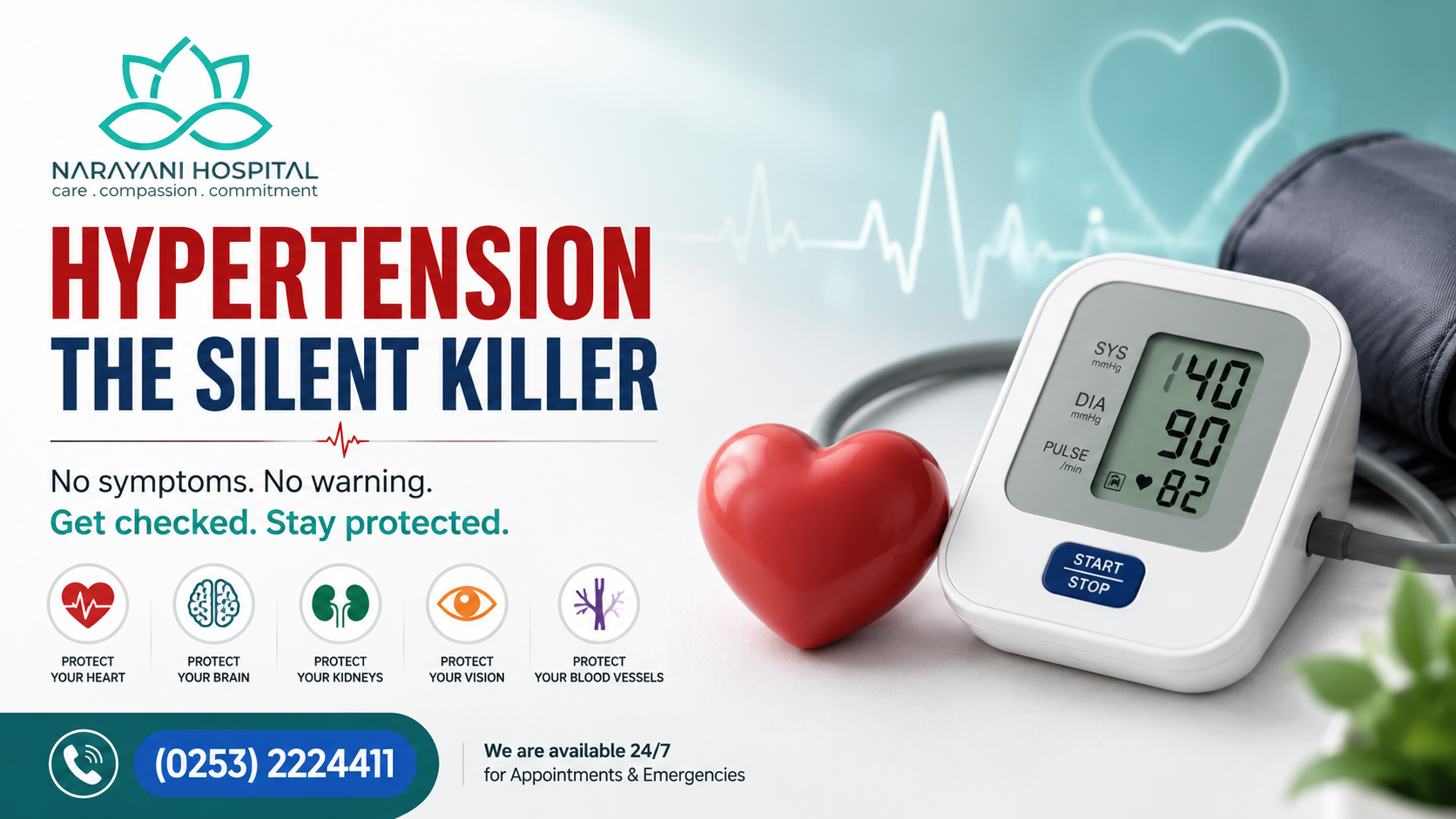
You could have it right now and not feel a single thing. No headache, no dizziness, no warning sign at all and that's exactly what makes hypertension, or high blood pressure, one of the most dangerous health conditions in India today. Doctors often call it "the silent killer" for good reason: it quietly damages your heart, kidneys, brain, and blood vessels for years before it ever announces itself, usually in the form of a heart attack, stroke, or kidney failure.
At Narayani Hospital, Nashik, our physicians see this pattern far too often patients walking in for an unrelated complaint, only to discover their blood pressure has been dangerously high for months, sometimes years. This blog breaks down what hypertension really is, why it's so easy to miss, and what you can do about it before it becomes a medical emergency.
What Exactly Is Hypertension?
Blood pressure is the force your blood exerts against the walls of your arteries as your heart pumps it around your body. It's measured in two numbers systolic (the pressure when your heart beats) over diastolic (the pressure when your heart rests between beats).
A normal reading is generally around 120/80 mmHg. When your blood pressure consistently reads 140/90 mmHg or higher, you're considered hypertensive. Anything in between is often labelled "elevated" or "pre-hypertension" a warning stage that's frequently ignored but shouldn't be.
Why Is It Called the "Silent" Killer?
Unlike a fever or an infection, hypertension rarely produces obvious symptoms. Most people with high blood pressure feel completely normal. There's no built-in alarm system telling you your arteries are under strain. By the time symptoms like severe headaches, blurred vision, chest pain, or shortness of breath appear, the condition has often already caused significant internal damage.
This is precisely why routine blood pressure checks matter even if you feel perfectly healthy. A five-minute check at your local physician's clinic in Nashik could reveal a problem years before it becomes life-threatening.
The Hidden Damage: What Untreated Hypertension Does to Your Body
Persistently high blood pressure doesn't just affect one organ it slowly wears down your entire cardiovascular system.
- Heart: The heart has to work harder to pump blood, which can lead to an enlarged heart muscle, heart failure, or coronary artery disease over time.
- Brain: Hypertension is one of the leading risk factors for stroke. Weakened or blocked blood vessels in the brain can rupture or clog, cutting off oxygen supply and causing lasting neurological damage.
- Kidneys: Your kidneys rely on healthy blood vessels to filter waste from your blood. Chronic high blood pressure damages these vessels, which is why hypertension is one of the most common causes of chronic kidney disease and, eventually, kidney failure requiring dialysis.
- Eyes: High blood pressure can damage the tiny blood vessels in the retina, potentially leading to vision problems or blindness if left untreated.
- Blood vessels: Over time, arteries lose elasticity and become more prone to blockages, increasing the risk of peripheral artery disease.
This is why hypertension is rarely treated as an isolated issue at Narayani Hospital it's managed with an eye on the heart, kidneys, and brain together, since all three are closely connected to blood pressure control.
Who Is at Risk?
While hypertension can affect anyone, certain factors significantly raise your risk:
- Family history of high blood pressure or heart disease
- Being overweight or obese
- A diet high in salt, processed food, and low in fresh vegetables
- Sedentary lifestyle with little physical activity
- Smoking and excessive alcohol consumption
- Chronic stress and poor sleep
- Age above 40 (though younger adults are increasingly being diagnosed too)
- Pre-existing conditions like diabetes or kidney disease
If two or more of these apply to you, it's worth getting your blood pressure checked regularly rather than waiting for symptoms.
Recognising the Warning Signs (When They Do Appear)
Although hypertension is largely symptomless, in more advanced or severe cases, people may experience:
- Persistent headaches, especially in the morning
- Dizziness or blurred vision
- Shortness of breath
- Chest discomfort or a pounding sensation in the chest, neck, or ears
- Nosebleeds without any clear cause
- Fatigue or confusion
If you notice any of these, especially in combination, it's important to consult a physician immediately rather than waiting it out.
How Hypertension Is Diagnosed and Managed
Diagnosis is simple a blood pressure reading taken on more than one occasion, along with basic tests to check kidney function, cholesterol, and blood sugar, gives your doctor a full picture of your cardiovascular health.
At Narayani Hospital, our General Medicine and Internal Medicine department, led by Dr. Pankaj Rane, evaluates patients holistically looking not just at blood pressure numbers, but at how hypertension may be interacting with other conditions like diabetes, kidney function, or heart health. Since chronic high blood pressure is one of the leading causes of kidney damage, our Nephrology team, headed by Dr. Devikumar Kelkar, works closely with our physicians whenever kidney involvement is suspected, offering everything from routine monitoring to advanced dialysis care if the condition has progressed. And because uncontrolled hypertension is a major stroke risk factor, our Neurology specialists, led by Dr. Anand Diwan, are equipped to manage and treat any related neurological complications.
Treatment usually combines:
- Lifestyle changes - reducing salt intake, maintaining a healthy weight, regular physical activity, quitting smoking, and limiting alcohol.
- Medication - when lifestyle changes aren't enough, doctors prescribe antihypertensive medications tailored to the individual's health profile.
- Regular monitoring - blood pressure isn't a one-time check; it needs to be tracked consistently to ensure treatment is working.
- Managing related conditions - since hypertension often coexists with diabetes, high cholesterol, or kidney issues, treating it in isolation rarely works.
Simple Steps You Can Take Today
You don't need a diagnosis to start protecting your heart. Small, consistent habits make a real difference:
- Cut back on salty and processed foods
- Add more fruits, vegetables, and whole grains to your diet
- Aim for at least 30 minutes of physical activity most days of the week
- Manage stress through activities you enjoy walking, reading, spending time with family
- Get your blood pressure checked at least once a year, more often if you're over 40 or have risk factors
- Avoid smoking and limit alcohol
Don't Wait for Symptoms - Get Checked
Hypertension earns its nickname because it works in silence, and silence is exactly what makes it so dangerous. The good news is that it's also one of the most manageable chronic conditions when caught early. A simple blood pressure check, a conversation with a physician, and a few sustainable lifestyle changes can make the difference between a long, healthy life and a preventable medical crisis.
If it's been a while since you last had your blood pressure checked, or if hypertension runs in your family, don't wait for a warning sign that may never come until it's too late.
Book a consultation with our General Medicine team at Narayani Hospital, Nashik, located at Mumbai Naka, Deepali Nagar. Walk-ins are welcome, and same-day appointments are available.
📞 Call us at (0253) 2224411 for appointments or emergencies our team is available 24/7.
Call NowFrequently Asked Questions
What is considered high blood pressure?
A reading of 140/90 mmHg or higher on repeated measurements is generally considered hypertension.
Can hypertension be cured completely?
In most cases, hypertension is a chronic condition that is managed rather than cured, through lifestyle changes and, when needed, medication. Early-stage or lifestyle-related hypertension can sometimes be controlled effectively through diet and exercise alone.
How often should I get my blood pressure checked?
Adults over 40, or anyone with risk factors like obesity, diabetes, or a family history of hypertension, should get checked at least once a year more frequently if already diagnosed.
Is hypertension linked to kidney disease?
Yes. High blood pressure is one of the leading causes of chronic kidney disease, and kidney disease can, in turn, worsen hypertension, creating a cycle that needs specialist management.
Which doctor should I consult for high blood pressure in Nashik?
A general physician or internal medicine specialist is usually the first point of contact for diagnosing and managing hypertension. At Narayani Hospital, Dr. Pankaj Rane and the internal medicine team handle blood pressure evaluation and treatment, coordinating with nephrology or neurology specialists if complications arise.